![LOUD[FRAMED]](https://loudframed.eu/wp-content/uploads/2026/08/LOUDFRAMED_logo_dark.png)
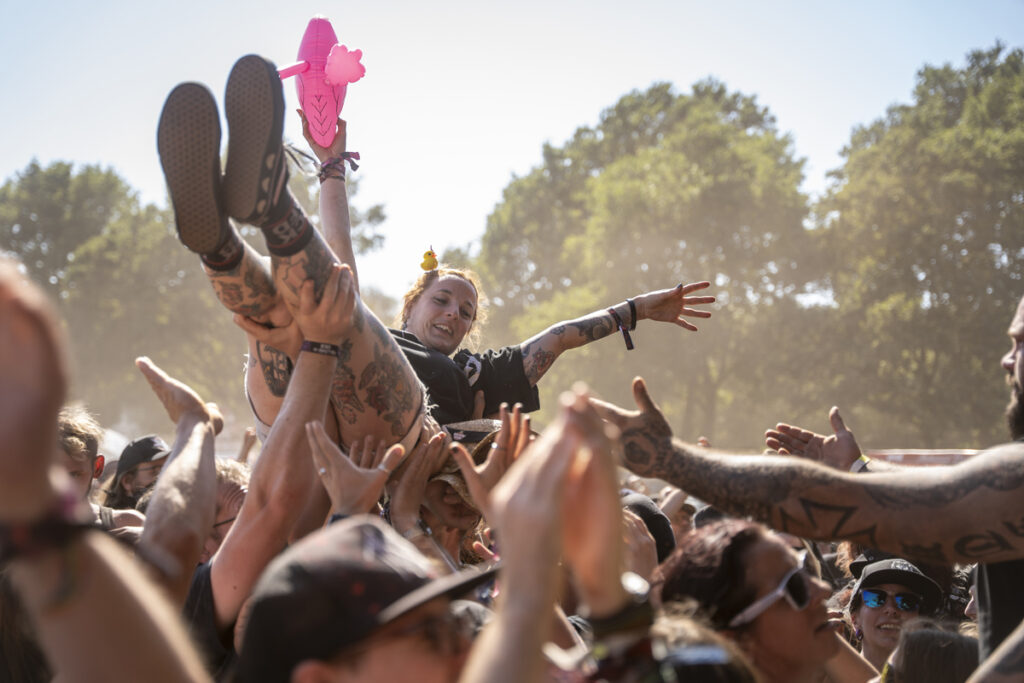
While Europe’s major festival season slowly moves towards its conclusion, Germany’s underground isn’t winding down with it. Across the final weekend of August, a network of smaller independent festivals is putting punk, hardcore and modern metal on stages far removed from the scale of the continent’s biggest summer events.
Among them are Wallesau ist Blau, Apen Air and Getöse Festival. Different locations, different line-ups and different identities, but together they highlight something essential to Europe’s alternative live scene: the infrastructure underneath the major clubs, tours and festivals.
These are places where an international hardcore veteran can share a bill with a regional newcomer. Where established European acts appear without the machinery of a major festival surrounding them. And where volunteers, local organisers and dedicated communities keep live music moving long after the biggest festival weekends are over.
Wallesau splits its weekend between punk and metal
Taking place on August 28 and 29 near Roth in Bavaria, Wallesau ist Blau makes that crossover particularly visible.
Friday is dedicated primarily to rock, punk and ska, led by Canadian Celtic punk veterans The Real McKenzies. Butterwegge, LÆRM, Rafiki and 7 Minutes To Hell complete the day.
Saturday shifts the festival firmly towards heavier territory.
New York hardcore and groove metal veterans Pro-Pain sit alongside German modern metalcore band Elwood Stray, with Mechanic Tyrants, Dryas Leaf, The Djingerbread Experience and Die Zäune completing a bill that moves between hardcore, post-hardcore, progressive metal, punk and modern metal.
The scale is relatively modest: eleven bands across two days. That is also part of its appeal.
Wallesau ist Blau is organised by the non-profit Musikinitiative Wallesau e.V., with volunteers behind the festival. The organisers deliberately combine international names with emerging bands from Bavaria and the surrounding region.
It creates something considerably different from a large destination festival. The international acts might attract attention, but the local scene isn’t pushed to a small stage somewhere on the edge of the site. It is built directly into the festival’s identity.
Apen Air brings international punk to a small German community
Hundreds of kilometres north, Apen Air demonstrates a similar principle from a punk perspective.
The festival celebrates its tenth edition on August 29 in Apen, with 16 bands across two stages.
The top of the bill brings considerable punk and hardcore history to the small Lower Saxony community. German punk veterans Dritte Wahl are joined by California melodic hardcore institution Ignite and politically charged German punk band Alarmsignal.
But once again, the international and nationally established names are only part of the story.
Erection, CF98, Saint City Orchestra, Dorfterror, Marderschaden, Zorrows, Yussuf Today, Flachlandkumpels and several other acts fill out a programme that puts regional and underground bands alongside much more recognisable names.
Even the infrastructure reflects its community-driven character. The festival lists 99 volunteers behind the 2026 edition, while shuttle buses connect Apen with several surrounding towns.
Local authorities expect as many as 2,000 punk fans to arrive in the area.
For one weekend, a small community becomes part of the wider European punk circuit.
Getöse brings FjØRT to Rietberg
Elsewhere, Getöse Festival takes place in Rietberg across August 28 and 29.
Its 2026 programme includes FJØRT, whose combination of post-hardcore, post-metal and emotionally charged German-language songwriting has made them one of the country’s most distinctive heavy bands.
Alongside them are acts including Acht Eimer Hühnerherzen and Attic Ocean, giving Getöse another identity again within the same weekend.
That variety is important.
Germany’s alternative festival ecosystem isn’t simply a collection of smaller versions of Rock am Ring or Wacken. These events tend to develop around particular communities, organisers and regional scenes. Their programming reflects that.
Some lean punk. Others metal. Some sit somewhere between hardcore, alternative and experimental music.
Together, they create a touring network.
The infrastructure underneath the European live scene
That network is easy to overlook.
The European alternative scene is often measured through its most visible layer: major festivals, arena tours and bands breaking into increasingly large venues. But those artists need somewhere to develop before reaching that level.
Regional festivals form part of that process.
They give emerging bands access to new audiences outside their hometowns. They allow established underground acts to reach areas that rarely appear on major touring routes. And by placing local bands alongside international names, they create connections between scenes that would otherwise remain separated by geography.
Wallesau ist Blau makes that philosophy explicit, describing its approach as bringing headliners and newcomers together.
Apen Air does essentially the same thing from another corner of Germany, surrounding names such as Ignite and Dritte Wahl with regional acts while relying on a substantial volunteer network to make the event possible.
This isn’t the glamorous side of the festival industry.
It might be the more important one.
Small festivals keep scenes connected
For audiences, festivals such as these provide something increasingly difficult to reproduce at major events: discovery without having to search for it.
You might arrive for Pro-Pain and encounter Elwood Stray. Come for Ignite and leave talking about a local punk band you had never heard of. See FJØRT in Rietberg rather than waiting for another major festival appearance.
For bands, those encounters are how audiences grow.
For organisers, they are how local scenes remain connected to a much larger European network.
And for the wider alternative live ecosystem, they represent another layer of infrastructure between tiny club shows and the festival stages that dominate summer coverage.
Germany’s final August weekend provides a useful reminder that Europe’s live scene isn’t sustained exclusively by its biggest events.
Sometimes it is 99 volunteers in a field in Apen.
Sometimes it is a non-profit music initiative bringing Pro-Pain into the Bavarian countryside.
And sometimes those smaller stages tell you more about the health of a scene than the biggest line-up poster of the summer ever could.